
Can Braces Close a Gap Caused by a Missing Tooth?
By Dr. Sharon Eder, DDS
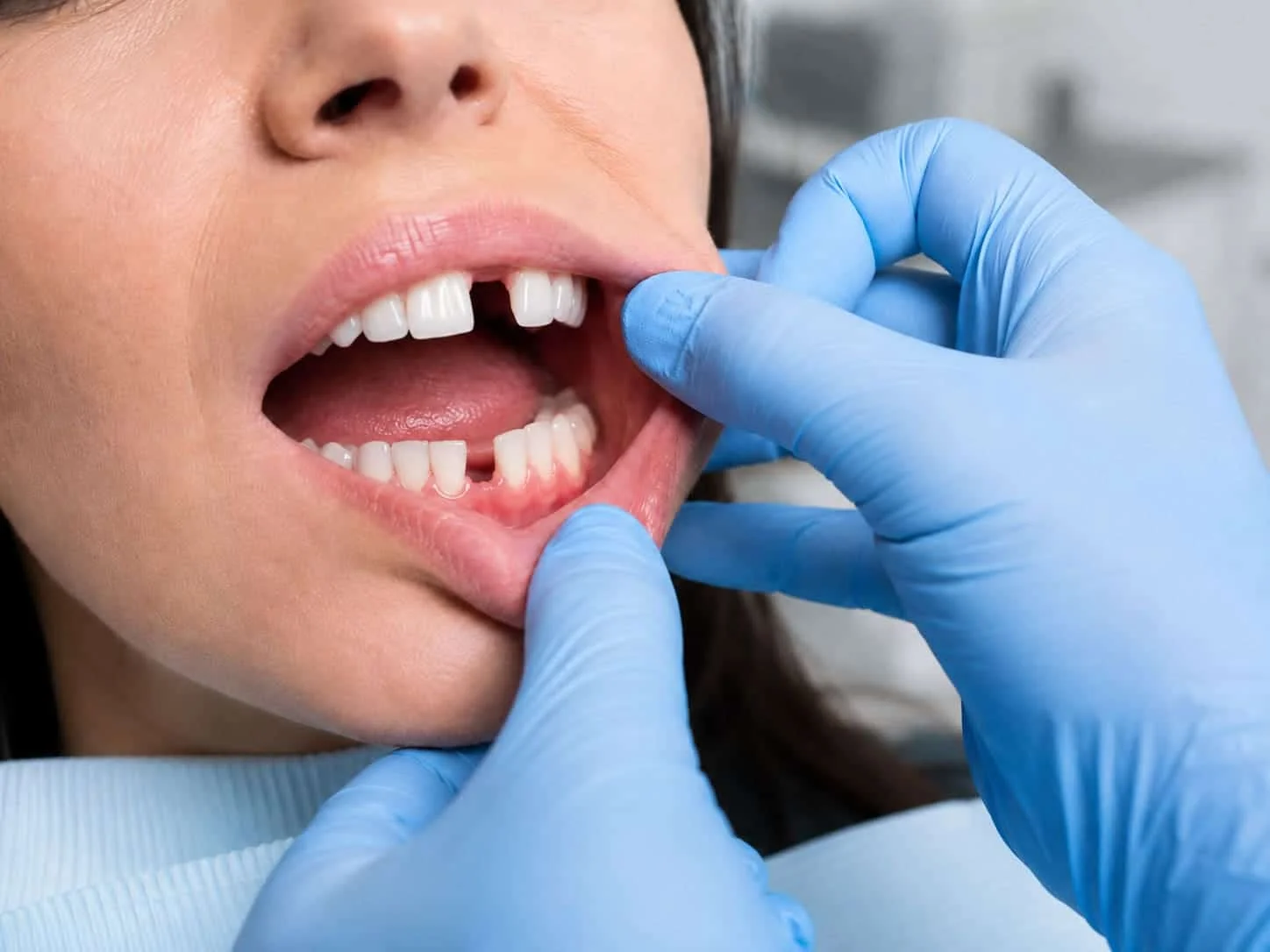
Yes, braces can sometimes close a gap caused by a missing tooth, but closing the space is not always the best treatment. In some cases, moving the surrounding teeth together can create a healthy, balanced bite. In others, the better approach is to preserve or create the correct amount of space for a future dental implant, bridge, or another tooth replacement.
At Smile Style NY, Dr. Sharon Eder looks at the entire bite before deciding what should happen to a missing-tooth space. The location of the missing tooth, your age, neighboring teeth, jaw relationship, and long-term restorative plans all matter.
Why Does a Missing Tooth Create an Orthodontic Problem?
When a permanent tooth is missing, the open space does not necessarily remain unchanged. The tooth directly opposite the space may also gradually move farther into the area.
This may affect:
- The alignment of nearby teeth
- Available space for a replacement tooth
- The way the upper and lower teeth meet
- Tooth angulation
- Smile symmetry
- Future restorative treatment
Some patients are born without a permanent tooth, while others lose one because of injury, decay, gum disease, or another dental problem.
The important question is not simply how to eliminate the visible gap. The goal is to determine where each tooth should ultimately sit so the finished smile and bite are balanced.
When Can Braces Close a Missing-Tooth Gap?
Braces can close certain missing-tooth spaces by gradually moving the neighboring teeth into the open area. Fixed appliances give the orthodontist detailed control over the position, angle, and movement of individual teeth.
Our braces treatment for Westchester patients can address spacing as well as crowding, crooked teeth, and bite problems. Whether complete space closure is appropriate depends on the specific tooth that is missing and how the rest of your bite is arranged.
Space closure may be considered when:
- The surrounding teeth can be moved into positions that support a stable, functional bite.
- Closing the gap will not create an unhealthy bite
- The final tooth proportions can produce an acceptable smile
- Avoiding a future replacement tooth is clinically reasonable
- Other crowding or alignment problems can be improved at the same time
Sometimes closing a missing-tooth space also requires moving several other teeth rather than simply pulling the two neighboring teeth together.
When Should the Space Be Kept Open?
In other cases, the orthodontic goal is exactly the opposite. Instead of closing the gap, braces may be used to create, maintain, or redistribute the correct amount of space for a future replacement tooth.
For example, an orthodontist and restorative dentist may plan for a dental implant after orthodontic treatment. Braces can move neighboring teeth into the correct positions and make sure their roots are appropriately separated before the restorative phase begins.
Whether the space is closed or preserved can depend on:
| Factor | Why It Matters |
| Which tooth is missing | Some teeth can be substituted more predictably than others |
| Patient age | Dental implants are generally considered after facial growth is complete |
| Bite relationship | Space closure must still allow the upper and lower teeth to function together |
| Size and shape of neighboring teeth | Tooth proportions affect smile appearance |
| Amount of crowding | Existing crowding may make space closure more practical in some cases |
| Bone and gum health | These tissues influence both orthodontic and restorative options |
| Future dental plans | Implant, bridge, or other restorative treatment may require specific spacing |
This is why treatment planning often involves coordination between your orthodontist and general or restorative dentist.
Can Invisalign Close a Gap From a Missing Tooth?
In some cases, yes. Invisalign treatment can move teeth into or around a missing-tooth space when the required movements are suitable for clear aligners. Dr. Eder uses digital treatment planning to map how the teeth should move through each stage.
However, Invisalign is not automatically preferable simply because there is a gap. Larger movements, significant root repositioning, complex bite correction, or difficult tooth rotations may sometimes benefit from the control of fixed braces.
The choice may come down to:
- How far teeth must move
- Whether their roots also need substantial repositioning
- The condition of the bite
- Whether attachments or elastics will be required
- Your ability to wear aligners consistently
- Whether space is being closed or prepared for restoration
Dr. Eder can compare both approaches after reviewing your teeth and long-term treatment goals.
How Do Braces Move Teeth Into a Missing-Tooth Space?
Orthodontic space closure is a controlled process. The goal is not to move teeth as quickly as possible, but to move them into useful positions while maintaining appropriate root alignment and bite relationships.
Treatment generally involves these steps:
- Evaluate the missing space. Dr. Eder assesses the surrounding teeth, bite, roots, and available space.
- Decide whether to close or preserve it. Your long-term dental plan helps determine the desired endpoint.
- Align the teeth. Initial orthodontic movement creates a more organized arch.
- Move teeth through the space. Braces or clear aligners gradually reposition the selected teeth.
- Adjust the bite. Additional movement or elastics may be needed so the upper and lower teeth fit together properly.
- Finish and retain the result. Retainers help protect the completed alignment after active treatment.
When a replacement tooth is planned, your dentist may complete that portion after orthodontics has established the correct space.
How Long Does Missing-Tooth Space Closure Take?
There is no standard timeline because a small gap and an entire missing-tooth space require very different amounts of movement.
Treatment may take longer when:
- Multiple teeth must move
- A large space must be closed
- Roots need significant repositioning
- The bite also requires correction
- Teeth need to move through dense bone
- Additional orthodontic appliances are necessary
Age, oral health, appointment attendance, and following instructions can also influence progress.
Patients should be cautious of promises to close a large missing-tooth gap within an unusually short period. Teeth and supporting bone need time to respond safely to orthodontic forces.
What Happens If You Leave the Gap Alone?
Leaving a missing-tooth space untreated is not automatically harmful in every situation, but it should still be professionally evaluated.
Neighboring teeth may gradually tip or drift toward the space. Changes in tooth position can reduce the room available for a future implant or bridge and may alter the bite.
The American Dental Association explains that missing teeth can affect chewing and allow nearby teeth to shift, which is one reason having a long-term plan is important.
If you already know you are missing a permanent tooth, an orthodontic consultation can help determine whether movement is occurring and whether intervention would be beneficial.
Braces or a Replacement Tooth: Which Is Better?

There is no universally better option.
Closing the space orthodontically may eliminate the need to place an artificial tooth in that particular location. Preserving the space may produce a better bite or smile in another patient.
The decision should consider the entire mouth rather than one gap.
A patient with significant crowding, for example, may have very different treatment possibilities from someone whose teeth already have plenty of space. Likewise, a missing front tooth creates different aesthetic considerations from a missing tooth farther back.
For younger patients who have congenitally missing teeth, treatment planning may also need to account for future growth before restorative procedures are considered.
At Smile Style NY Orthodontics, we create individualized plans for children, teens, and adults throughout Westchester County. Dr. Eder can also coordinate orthodontic movement with your dentist when a future restoration forms part of the final plan.
Find the Right Plan for a Missing-Tooth Gap
A gap caused by a missing tooth should not automatically be closed, and it should not automatically be filled with an implant. The right answer depends on what creates the healthiest and most balanced final result for your smile.
Dr. Sharon Eder can evaluate the missing space, your surrounding teeth, and your bite and explain whether braces, Invisalign, space preservation, or coordinated restorative treatment makes the most sense.
Request a consultation at our Mount Kisco office or call 914-359-2462 to get started.
Frequently Asked Questions
Can braces completely close a missing-tooth gap?
Sometimes. Braces can completely close certain missing-tooth spaces, but whether that is appropriate depends on the missing tooth, surrounding teeth, bite, and overall treatment plan.
Can Invisalign close the space from a missing tooth?
Invisalign can close some missing-tooth spaces when the required movements are suitable for clear aligners. More complicated movements may sometimes be better managed with braces.
Should I close the gap or get a dental implant?
That decision depends on your bite, age, tooth positions, available bone, smile proportions, and long-term restorative needs. Your orthodontist and dentist may work together to determine the best approach.
Can braces make room for a dental implant?
Yes. Braces can be used to create or maintain the appropriate space and position neighboring teeth and roots before implant treatment.
How long does it take braces to close a missing-tooth gap?
Treatment time varies considerably. The size of the space, number of teeth being moved, bite correction required, and individual response to treatment all affect the timeline.
